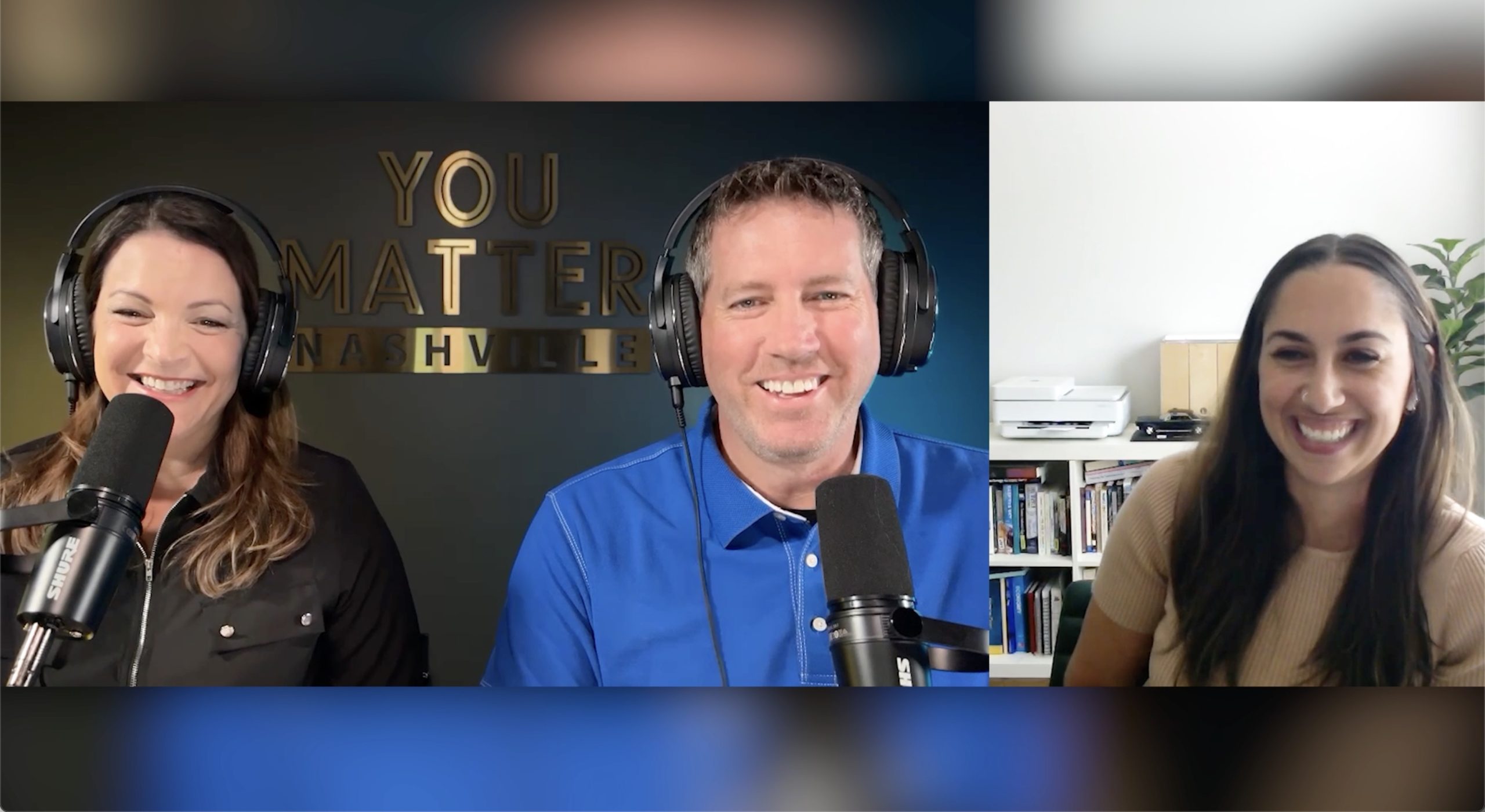
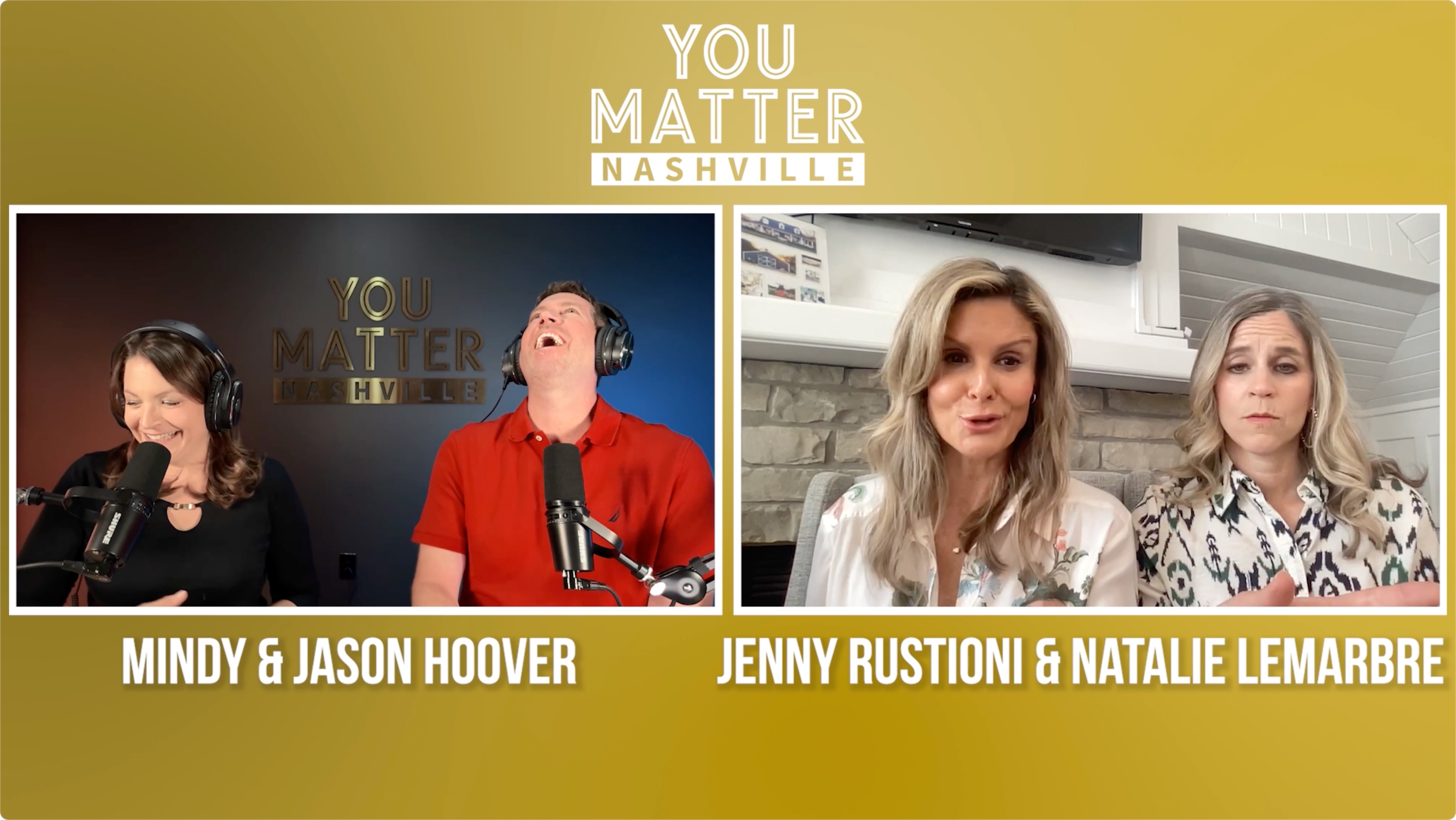
Kailey Cornett's Calling to Lead Hope Clinic for Women
Hope Clinic for Women is a Nashville nonprofit that has walked with women, men, and families through unplanned pregnancy since 1983, offering medical care, counseling, parenting programs, and women's healthcare. CEO Kailey Cornett heard a calling to this work at 16 and left a career in private equity to lead it. Learn more or support the work at hopeclinicforwomen.org.
Listen to the episode
Jump to a moment
- 00:00, Introduction to Hope Clinic and Kaylee's Journey
- 09:58, Community Engagement and Support Services
- 19:50, Challenges in Today's Healthcare Market
- 23:07, The Impact of Nurse Practitioners
- 23:56, Resilience in Parenting: Kayla's Story
- 26:36, Community Support and Generosity
- 27:59, Navigating Pregnancy: Resources and Support
- 29:11, Affordable Mental Health Care
- 31:51, Post-Abortion Support: Uncovering Hope
- 34:47, Challenges in Nonprofit Work
- 38:11, Mentorship in Parenting Programs
- 39:45, Upcoming Events and Fundraising Initiatives
- 45:49, Closing Thoughts and Community Engagement
This episode discusses unplanned pregnancy, pregnancy loss, abortion, and postpartum mental health.
What happens when a woman finds out she's pregnant and everything else in her life feels uncertain at the same time? On this episode of You Matter Nashville, we sat down with Kailey Cornett, the CEO of Hope Clinic for Women.
Her story is a good reminder that the people behind Nashville's most rooted institutions usually arrived by a winding road. Kailey heard a calling toward this work as a teenager, spent a first career somewhere else entirely, and came back to it.
What drew Kailey Cornett to this work?
It started when she was 16. Growing up Pentecostal, Kailey went to a youth conference and came away with a clear sense that she was meant to serve women facing unplanned pregnancy. At first she pictured it through her own eyes as a teenager, imagining the isolation and fear a girl her age would feel if she continued a pregnancy everyone could see.
Volunteering at a pregnancy center in Phoenix stretched that picture. She realized it wasn't only teenagers. It was women in their twenties and thirties carrying the same fear alongside harder things, domestic violence, unstable housing, jobs that don't bend for a pregnancy.
She had known since she was a kid that she wanted to build something. So she blended the two, studying nonprofit management and business, working closely with the leader of a similar clinic in Los Angeles, and spending her first career in private equity. When that work stopped feeling like hers, she made the move back to the calling. She came to Nashville in 2018, started at Hope Clinic as a volunteer, joined the staff in 2019, and now leads it.
How does Hope Clinic for Women walk with a family?
Hope Clinic for Women has been part of Nashville since 1983, and its care is wider than most people expect. From its longtime home in Midtown, it meets women, men, and families where they are, starting with the moment a pregnancy is confirmed.
Pregnancy services begin with an ultrasound and an honest conversation about a woman's options. If she decides to parent, she's invited into the Bridge program, a parenting program open to her and whoever makes up her support system, a partner, a mom, a dad.
Kailey is quick to say the clinic isn't trying to be everything. One of its core values is keeping the main thing the main thing. When a need falls outside what the clinic does, its client advocates connect people to the wider web of Nashville nonprofits.
What does the parenting program actually include?
The Bridge program runs until a child turns one, and it's built around both learning and belonging. There are education classes, an on-demand online library, and live sessions on everything from lactation to nutrition to self-care.
Families can move through it two ways. Some choose a self-service path, picking the classes, counseling, and mentorship that fit their season. Others join a cohort, grouped with other moms due within the same three months, so they go through pregnancy and early motherhood together.
There's also a very practical side. The clinic's maternity store is stocked with donated clothing, diapers, wipes, cribs, and car seats, about half of the clothing brand new. Kailey says families in the program generally don't buy diapers that whole first year, which is no small thing when you're already stretched.
What else does the clinic offer beyond pregnancy?
Plenty. The clinic also provides preventative women's healthcare, the annual visits and testing many women put off, delivered by nurse practitioners and nurse midwives who spend around 45 minutes with each patient. It's a fit for women who are new to town, uninsured, self-employed, or simply want a slower, more personal appointment.
The counseling runs deep too. A team of therapists specializes in the grief around pregnancy and parenthood, including miscarriage, pregnancy loss, and failed IVF or adoption. Professional counseling outside the parenting program is offered on a sliding scale, so cost stays manageable.
One program reaches far past Nashville. Uncovering Hope is an online post-abortion support group that meets weekly over Zoom, led by a therapist and a woman who's walked that road herself. Kailey says it served more than 100 women in a recent year, some joining from across the country and around the world.
Why does the need continue in Tennessee?
Because the hard circumstances behind an unplanned pregnancy don't disappear when a law changes. Kailey noted that since Tennessee's 2022 shift to one of the most restrictive abortion laws in the country, the clinic's work has stayed just as necessary.
"All the reasons why a woman is considering terminating still exist. The work still has to be done, and so that's why we continue to exist."
Much of that work is quietly practical. Client advocates help a woman name her real stressors, most often housing and mental health, and find resources for them. A newer, grant-funded program can even cover a few months of rent around delivery, so a mom isn't panicking about losing her home right when her baby arrives. The clinic doesn't take insurance, and Kailey is firm that cost shouldn't keep anyone from care.
What does the clinic need most right now?
Mentors, more than anything. Kailey is candid that the parenting program has around 100 moms and only about 30 mentors, and closing that gap is the clearest way for an everyday person to help.
The ask is smaller than it sounds. Mentors don't need to be nurses or counselors. They connect with a mom or dad a couple of times a month, in person or by phone, usually starting in the second trimester and staying through the baby's first year.
"You just have to be a couple steps ahead of her. Doesn't mean you have to be the perfect mom or perfect dad."
There are other ways in too. Hope Clinic runs a full calendar of gatherings through the year, its spring gala at The Factory in Franklin, a fall golf tournament, a December Cider and Carols evening, and intimate Women of Hope events hosted in supporters' homes. Each one is really an invitation to learn the clinic's story and carry it forward.
How can you help?
The most useful thing most people can do is get involved on the clinic's terms. You can give toward the work, donate new or gently used items to the maternity store, or step into that mentor role and walk alongside a family for a season.
If you're not sure where you'd fit, the clinic hosts a short intro class a couple of times a month, a kind of Hope Clinic 101 that ends with a conversation about where you'd be a good match. Everything starts on the official site.
Kailey's throughline is a hopeful one. Long before any headline, and long after, women in Nashville have needed a place that meets them with dignity and practical help at once. For more than 40 years, that's what this clinic has tried to be.
Episode Resources
- Official site: hopeclinicforwomen.org
- Volunteer and get involved: friendsofhopeclinic.org/volunteer
- Give: friendsofhopeclinic.org/donate
Ways to Help
Support Hope Clinic for Women by becoming a mentor and walking alongside a mom or dad through pregnancy and a baby's first year, the clinic's greatest need. You can also give toward the work, or donate new or gently used clothing, diapers, and baby gear to the maternity store. If you're new to it all, start with the clinic's twice-monthly intro class to find where you fit.
Guest Information
Kailey Cornett
Kailey Cornett is the CEO of Hope Clinic for Women, a Nashville nonprofit serving women, men, and families since 1983. She felt a calling to this work at 16, then studied nonprofit management and business and spent a first career in private equity before returning to the mission that had stayed with her. She moved to Nashville in 2018, started at Hope Clinic as a volunteer, and joined the staff in 2019. She now leads an organization known across the city for meeting people facing unplanned pregnancy with dignity and practical support.
About the Organization
Hope Clinic for Women
Hope Clinic for Women is a Nashville nonprofit that has walked with women, men, and families since 1983. From its longtime home in Midtown, it offers medical care around pregnancy, a parenting program that runs through a child's first year, preventative women's healthcare with nurse practitioners and nurse midwives, and professional counseling on a sliding scale. It runs a maternity store of donated baby goods, an online post-abortion support group, and client advocacy that connects people to housing, mental health, and other resources. The clinic doesn't take insurance and works to keep cost from being a barrier. Its official site is hopeclinicforwomen.org.
Visit the organization websiteKnow Someone Making a Difference?
Nominate a Middle Tennessee changemaker for a future You Matter Nashville episode.
Nominate a GuestHope Clinic for Women, hopeclinicforwomen.org (official site, verified 2026-08-09). Volunteer and giving pages hosted at friendsofhopeclinic.org. Episode interview with CEO Kailey Cornett, You Matter Nashville, recorded early 2025. Program details, service descriptions, and figures such as the number of pregnancy tests, mentors, and support-group participants are as stated by the guest in the episode and may have changed. See hopeclinicforwomen.org for current programs, events, and ways to give.
Full transcript
Read
Speaker 2 (00:00.098)
Hey, Nashvilleans, welcome to the You Matter Nashville podcast, the place where every story we share is a celebration of you, the heartbeat of our community. I'm Jason Hoover, delighted to be one half of your hosting duo. And I'm Mindy Hoover, joining you alongside Jason to bring the stories of inspiring individuals and unsung heroes making a positive impact right here in our hometown. Every episode is about passions, dreams and actions that stitch together the Middle Tennessee community. So if you're looking to get inspired by the good happening around us,
Or if you want to hear from the change makers who believe, just like us, that you matter, then hit that follow button on your favorite podcast platform. And if you are looking to make a move in the middle Tennessee area, and Dan and I are real estate professionals and would be honored to serve you with excellence. Now let's dive into another episode of You Matter Nashville.
Speaker 2 (00:52.098)
Welcome to You Matter Nashville, where we shine a light on individuals making a positive impact in our community. Today, we are honored to have Kaylee Cornette with us. She is the CEO of Hope Clinic for Women. Since 1983, Hope Clinic has been a beacon of support, offering medical care, counseling, and education to women, men, and families facing unplanned pregnancies and related challenges. Kaylee's dedication to this cause began at the young age of 16.
and her journey is both inspiring and impactful. Kaylee, it's such a pleasure to have you with us today. Your commitment to supporting women started so early in your life. Can you tell us a little bit about what drew you to this field?
Yes, it's kind of a crazy story, I guess, in the sense that I was young and knew what I wanted to do. I'm sure my parents would not be surprised by that at all. I recently found a letter that I wrote to myself as like a school project when I was, I think I was nine or 10. It was like 20 years from now. What does my life look like? And I literally had a board meeting as 20 years from now, I will be going to a board meeting and writing a newsletter to my other investors because apparently I was going to be investor as the age of nine. That was my
So.
That is the best thing ever. I'm going to be at a board meeting to make money. That's what I'm doing. At nine years old.
Speaker 1 (02:07.83)
yeah.
Speaker 1 (02:12.512)
Yes. Yeah. Wild. I don't have twins. But so when I was 16, I grew up Pentecostal and attended a youth conference where very clearly heard from the Lord that he wanted me to serve women who found themselves in an upland pregnancy. And at the time, I very much viewed it through the lens of my own experience as a 16 year old going to a large public high school where all my friends knew I was Christian.
And if I was in that place and made the brave decision to continue with that pregnancy, the isolation and the shame and the fear that I would feel, my heart just really broke for that girl. And what would it look like to create a community where she felt like she could belong during the difficulty of a pregnancy that everyone can see, but then even beyond that.
That was the initial trigger. And what that led me to was volunteering at a very similar organization to Hope Clinic in Phoenix, Arizona, where I lived. And there is when I kind of realized the reality of it. It's not just 16 year old girls who get pregnant. It's these women in their twenties and thirties who are dealing with the complexities of that life brings you, whether that's domestic violence or socioeconomic issues. And then I was like, okay, am I so sti... I know I want to do this work.
I thought maybe I was supposed to be a counselor because these women, a lot of them needed counseling. I had enough self-awareness as a 16 year old to know that listening is a learned skill for me, not a natural inherited skill, especially from my family background. And so I was like, well, maybe counseling isn't going to be the way to go. But obviously I wanted to be an investor at age nine. So was like, how do I blend these two together?
someone has to run these organizations, right? And so I chose to study nonprofit management and business in college, got to work with another center very similar to Hope Clinic in Los Angeles called Clarice. I went to school in California. And really that was where my two loves met of wanting a really healthy, profitable business.
Speaker 1 (04:31.992)
to meet this passion that I have for women who find themselves in an unplunged pregnancy or other issues. yeah, so that's kind of where it is. My first career was in private equity, which is super wild, and then got to make the career transition back to nonprofit work when I moved to Nashville in 2018.
Wow. You we kind of grew up the same religiously and I had a similar experience when I was 18 and didn't know what I really wanted to do. You know, I had my top three list and all the things and God spoke to me that he wanted me to work with kids that no one else wanted or the ones that were too hard and helps like, and then I went into teaching and that's pretty much all I got. I
Speaker 2 (05:21.432)
Maybe not so needy, no. But working with the forgotten kids or the kids that kind of got pushed to the sides, those are kinds that kind of, you know, found me. So it's so neat that, you know, you kind of had that moment of this is where the need is and I want to put you there. So that's really cool to have that, you know, just that innate being inside of you to push you to do great things. So, so you started in a place in LA.
Yes, clinic in Los Angeles is where I worked with their CEO really closely. And I honestly thought that career wise, would work at a pregnancy clinic later in my career. I was like, I'll do the for-profit thing first, make money and then go back. And then doing that for a while, was like, oh, I have no heart in this and I can't spend, is majority of your life at work with something I don't care about.
That rings so true. it really, really does. If you're not passionate about it, like why are you even living like that? So I get that. Which is one of the reasons we started this is, you know, we had that desire and that, that need to feel that soul of reaching out and helping people. so, but we do for profit, you know, to pay for everything. But, we started this like, man, this is our passion project is getting to know people like you, you know, finding people that are doing good things in the
community. So definitely that what you shared sings to the heart. So why what year did you come to Nashville and join Hope Clinic?
I moved to Nashville in 2018, back in the time people said there's 100 people a day moving to Nashville. I was very shy about the fact I moved here from California, which I still am. I'm from California. I just moved here from California.
Speaker 2 (07:12.43)
like, no.
Speaker 2 (07:16.492)
I know some people don't be that nice about it, you know. If you say you're from California, they're like, you know.
I'm like, I didn't buy my house in cash. like...
I think I got a mortgage. I'm struggling like everyone else.
But I actually started volunteering at Hope Clinic first and then was brought on staff in 2019 right in January. So I just celebrated six years last week. Thank you.
Congratulations. So what brought you out to Nashville specifically?
Speaker 1 (07:50.478)
Yeah. So I, um, the, work I did in California was for that private equity company where I was a consultant for the software companies in our portfolio and I traveled for work. was crazy, wild, 80 hour work weeks. Um, and I realized that like you talk about it's, it's, you have to have your heart in something. And I looked kind of at the career paths in front of me of, okay, do I want to work my way up in these software companies or do we want to work my way to partner in the firm? And
Neither of them were interesting. and that coincided with, I met a boy who is from Georgia. and so we had been dating long distance for about eight months. And at that point I was, when I was ready to make a career transition, there's nothing that was really holding me in LA other than my job. And so it would be nice to not for us to get on a flight to see each other. So he was moving to Nashville, at the time for music. He's an audio engineer now.
And I said, what if I moved to Nashville with you? So we moved to Nashville together in 2018.
So he said, yes, that's important.
He did say yes. did propose two years later. Gosh, too much time later. Really?
Speaker 2 (09:07.438)
Like you should have made this decision faster. said yes to go to Nashville.
I moved across the country for you. feel like you can see that I'm good at here. But hey, five years in, we're great.
And so you have something similar again. See, was, I was, we both grew up in Arkansas and went to a college there together, but I transferred to Belmont and, we didn't know each other before I did. And it wasn't until I went for a homecoming game back at that university. And, some of our friends connected us, like, throw us in the back of a car together to go to a store. Yeah. They're like, Hey, Hoover, Mindy, go win this.
And literally it was that that night and here we are.
Okay.
Speaker 1 (09:53.666)
Where did you guys go in Arkansas?
I'm ready to go to school. Leave it to Henderson State.
I love that.
Yeah, I went there for a homecoming and came back with a girlfriend, ended up being a wife and ended up great. was a good move for sure.
This is a bad time to bring it up if it's not.
Speaker 2 (10:16.94)
Right? We're like, and we're still together.
I wasn't a counselor.
So Kaylee, how does your clinic engage with the broader Nashville community?
Yeah, so we're 40 years old. That's one of the most amazing things I feel like about Hope Clinic is when I came in even six years ago is that it had this incredible legacy. If you I feel like spend any time talking to folks who are from here, you'll run into someone who knows Hope Clinic. And that's been really a delight that we have this these really deep roots. So we have always lived in this midtown area, the building that we're in right now. We've been in since the 90s, providing that
counseling for people who find themselves in unplanned pregnancy, but also that preventative women's health care and support afterwards through our parenting program. So I think we've kind of always been this staple where the only clinic and center like us that specifically do the pregnancy and parenting support that we do in Nashville. And I think that a lot of folks know us for that. But of course, as you guys know, there's a lot of people moving here too, who we would love to get to know us.
Speaker 2 (11:30.766)
That's very true. is a, there hasn't been much of a slowdown. It did slow down a little bit, but not too much of a slowdown. Now, everything that you guys supply, because I mean, it's not just, we're working with women that are pregnant. There's a lot of different things that you guys do. Like you have classes that you have, I guess like a mentoring thing through those classes. You have even postpartum counseling and everything. I would love for you to talk, especially on
the classes. Not all of us are like, you know, grow up with large families, know how to do everything and ready for parenthood. So how do you guys get everybody prepared?
Yeah, I'll kind of take you through the journey. So women typically who who's coming to us for pregnancy services will find us online or through a friend. Those are like neck and neck ways that people find us. So she comes in, we confirm her pregnancy with an ultrasound. We talk about all of her options. If she makes the brave decision to continue with that pregnancy and parent, we invite her to be part of what we call our bridge program. And this is a parenting program that is open to her.
and her partner or her mom or dad, whoever is kind of her support system are invited to be a part of this. And that includes education classes, like you mentioned. We have an online library that she can kind of watch on demand as well as we do live classes. So we'll do, we recently did one on lactation. We had a lactation consultant come in and kind of teach moms about the, how to have good breast milk supply. And then we also do things.
like self care. We do some things related to spiritual development and nutrition of wide variety of folks, a wide variety of things in two different ways. So a woman can join our program and kind of do what we call self-service where she looks at our whole list of classes and counseling and mentorship and chooses what she wants and what's going to be a fit for her season of life.
Speaker 1 (13:39.286)
And then we have what's called our cohort model where we group moms by their due date. And we kind of have a plan for them to attend. So they get to know each other. The piece of that that I really love is the community. These moms get to meet each other and they're all going to be due in the same three months. And so they're getting to go through pregnancy and early motherhood together that program in both directions, last until that child's a year old. So we're kind of giving them that first head start into parenting. We know parenting is of course a lifelong journey, but
We want to get some good roots down.
That's amazing because, especially for first-time parents, you have so many questions. There are a lot of people that you don't know who to go at. mean, you can go online, I mean, if you guys- so true. It's not real. Right. You've got people that are going through the same, kind of in the same- Trimester. Trimester. They're experiencing a lot of the same things that are happening. I love that.
There's a lot of evidence research done on how, it's called centering pregnancy. It's actually a way that even prenatal care can be provided is that when you're in this group setting and Mary asks a question that you hadn't really thought of, but you actually were like, I would love to know the answer to that. You get a better experience. And so our moms are learning from each other.
Usually in those gatherings, we have a facilitator, but we also will bring in specialists. So we'll have like a doula come and talk about the importance of doula as they're preparing for labor and delivery. And there's this group learning aspect where I think creates a richer experience for each woman.
Speaker 2 (15:16.27)
I agree. And I wish I had that support. You know, I was a young mom and well, I was 23 at the time. But, you know, in the South, that's old. I'm joking.
But just going through that, mean, how rewarding that would be being with other people and just having that support. But you don't just support through that. Like you guys also have like a store and different things as well. So please explain that for the parents that take part in this program, what they get in return.
Yeah, I just like having kids is expensive. We all know that. And so we want to alleviate some of that financial burden through we have what we call our maternity store or baby store, baby boutique, and it is full of clothing and diapers and wipes and cribs and car seats. All of it of which has been donated, I would say clothing wise about half of its brand new stuff. We all have I know I have a whole outfit that my son like
never wore because I forgot it was in the closet and he grew out of it. And so it's stuff like that as well as we get some really gently news, beautiful stuff like cribs and bassinets and things like that where she can come and shop. I would say for the people that participate in our program, they at least never buy diapers that whole first year of that child's life.
Wow, that is amazing. That's a huge relief. I remember us having to buy diapers and taking out a loan for all of them. I mean, it's... It's like, we can reuse that one, right? I remember with our son and the school asked like, what, we're going to do a baby shower. What kind do want? like, diaper. I want a diaper shower. That's what I want.
Speaker 1 (17:02.602)
And I calculated the cost of each diaper change. He's like, okay, if we approximately use three wipes, and we use this, but he's like, if we change it, and then he poops again, he's like, that just costs another 67 cents, but are you sure you're prepared to do? Are you
you done? you finished this time? That reminds me of the father off of the show Everybody Hates Chris. Did you all ever watch? Or I know you did where he would like they would... Everything's money. Oh, that was $1.32 worth of meat you threw away.
You're my-
Speaker 1 (17:37.91)
My house is when it comes to diapers.
but it's a real problem. It's a real problem. You know, are we going to wash those diapers out? No, we are not. There are some special people here on earth that like doing that, but I am not one of them.
thought about it, but I have not dipped my toes into a
Give me a pamper. what are some of the significant challenges that you guys face in this in today's health care market?
Yeah, that's a great question. I would say our clients are coming up against a handful of things. I would say for people who are related to our pregnancy services, it's really that oftentimes this pregnancy is one of many things going on in her life that are a challenge. Housing usually being one of them, employment.
Speaker 1 (18:32.182)
Maybe she's in an unhealthy relationship or her own mental health is not very strong. And so she's looking at this pregnancy, which is just one of many crises in her life and thinking like, how could I possibly handle one more thing on top of what I have in front of me? And that's where our, our team of what we call client advocates come in and help her really unpack what are the main stressors? What are the resources that we can get you, whether that's at Hope Clinic or one of the other amazing nonprofits in town.
so that we can kind of remove those obstacles in the way of her choosing life. I would say those top ones are definitely typically housing and mental health. We're lucky that in-house we can provide that counseling for her for free as part of that program with our licensed therapists. We're not a housing agency, so that's a little bit tougher. We did just launch a rent assistance program where we're able to cover three months rent, really kind of targeted around usually delivery.
So we don't want a woman to be anxious about losing her housing because she's out of work because she's just delivered. And so through a grant that we received, we're able to cover those months.
That's amazing. It's awesome. is. Like you said, there's so many things happening and just another thing on top of them, that three months is a burden taken off of them and they focus on what matters right there in front of them. What I love more than anything is that you don't just go, hey, you just want to keep your baby. You like actually give support. You give mental support, physical support, classes. You said they have the education.
You're even putting your money where your mouth is and helping them in their months of most dire need. mean, it's, I just think it's just so admirable to have a program that's just so fully faceted to help every situation. You guys have thought of everything really when it comes down to it. So I applaud you guys. You're doing great work.
Speaker 1 (20:32.942)
Thank you. Yeah, I'll say this and some of your listeners may be aware that obviously in Tennessee, we have one of the most life-affirming laws in the country that it's almost in all circumstances illegal to get an abortion. And when that happened, that deposition happened in 2022. All the reasons why a woman is considering terminating still exist. All of those really valid experiences and challenges, those are still there.
even with the changes in legislation that we're grateful for, but the work still has to be done. And so that's why we continue to exist.
Yeah, the void is still there. And yeah, so just thank you. Because I know that's one of the biggest complaints, you know, from just everyday citizens is like, oh, they're wanting to outlaw all these things, but they're not wanting to help the girl that's in need. I love it. love it.
Yeah. Yeah. And I'll to your question to Jason about healthcare. So for our preventative women's healthcare, I feel like some of the challenges that the women we serve there who are getting their annuals with us or STI testing or even just a woman problem visit is they may be new to town and not have connected with a provider yet or they don't have insurance or really they're just looking for
kind of a higher level of anonymity and care. So our team of advanced practice nurses, like nurse practitioners and nurse midwives who provide those appointments, we spend 45 minutes with each of those women, even if just she's presenting as like, think I have a yeast infection. We're gonna spend time with her to really talk about her physical health history. We're gonna talk about her mental health. We're gonna make, again, referrals to the needs that she has, not just kind of getting her in and out.
Speaker 1 (22:21.71)
Yeah, our model really creates space to address more than just whatever concern she walks through the door with so that she can walk away feeling more educated about herself, how her body works, and so she can make healthier choices in the future.
the band.
Speaker 2 (22:36.49)
It also creates trust. Women have to have that trust in their physician or their caregiver. know, women are so easily told, you're crazy. that's, is that really how you feel when you go into an appointment? take this medication, you'll be fine. And you're like, no, I have some valid concerns. I would like for you to hear me out. So, I have always found that going to a nurse practitioner and they just have a different set of ears.
Yes, just have this medication or just do-
Speaker 2 (23:06.186)
You know, and how they look at everything and they really take the time with you. And so I love that.
Yeah, we have amazing team.
So on that journey, what's a story that sticks out to you that just really, I don't touch your heart?
Yeah, we have a woman who shared her story recently with us. Her name is Kayla. And what's so crazy about this work is that when you consider the length of time that we're with someone in our parenting program, it's up to 20 months, which is like, in nonprofit years, I feel like forever.
So we had a woman who says, think I'd like to share my story with you all of how you've impacted me. And I was like, okay, cool. I don't know if I know her. And then I realized, I do know her, because two years ago we did XYZ. So she found us really early on in her pregnancy and initially was excited. I think she was like hesitantly excited about the pregnancy. When she told her boyfriend, he was like, nope, I'm out. I'm not interested in being a part of this.
Speaker 1 (24:16.15)
And that was her housing. And so she was then left with a really tough decision of keeping this housing, keeping this relationship that she had thus far enjoyed. And at the same time, I think her employment ended or like because of pregnancy, she wouldn't be as readily able to continue her employment. So she came to us then with a very different story of
think I still want to do this, but my life circumstances look very different. So she was one of the first people we did. We actually covered her car payment for a few months, right at the beginning of her pregnancy so that she can try to get employment for the rest of her pregnancy. Joined our parenting program, joined our cohort model. So she got to meet other moms because this was her first child. And just kind of hearing.
how she's reconnected. actually works for one of the housing authorities now and helps other moms get housing. I love that. Which is like such just a beautiful full circle moment. Her daughter's just over one years old now. And it's just really beautiful to see the two of them together thriving and her able to give back to other moms. I think that's that's what surprises me the most about the women that we serve is how incredibly resilient they are and how generous.
Thanks
Speaker 1 (25:36.374)
we'll get people who will like donate formula that they ended up not. They're like, Hey, I got this can and I actually don't need it. Can I give it back to the store so a mom can get formula or we actually are done with these clothes now. Can I donate them back? And it's really beautiful to see that kind of pay it forward attitude that they have.
I love that. Now what type of items do you guys like take for your store?
Yeah, so we take clothing up to 2T that's like gently used. We're always in need of diapers. I would say that even some of those larger sizes, one of the things that may be difficult is for a mom who has a young kiddo and then she gets another pregnancy diagnosis and she's going, I have a one year old. That's it still in fives and sixes and I'm barely getting those diapers and we can help alleviate some of that burden while she's processing through this new pregnancy.
some of those big items like cribs and strollers are always great. we have a full list on our website and we even have an Amazon shopping list that we update regularly with some top needs are like, think right now on there, have a specific brand of baby monitors and like safety locks that we want all of our moms to walk away with.
great. I love that. Then they can also secure their home. Perfect. So if somebody's listening and they're thinking, I don't know what I would this be for me. What would you say to them? What what what person is someone that you are able to help? I guess I don't know if I'm saying that correctly, but yeah.
Speaker 1 (26:57.496)
Mm-hmm.
Speaker 1 (27:19.83)
Yeah, I would say that...
I think with any time you see a positive part, I'll talk about kind of our services differently. So for our pregnancy services, I think that any time you see kind of those two lines, it's scary, even if you've been trying for years and years and years. know that when I, my husband and I got pregnant last year, I was like, we wanted this, this was planned and this is still terrifying. That's very normal. I want to normalize that for everyone.
But if you get to the next week and you're still feeling more scared than excited, if on that spectrum of joy to fear, you're feeling that fear or you feel like you're isolated and you haven't been able to tell anyone, we would love to be that first person that you tell to kind of walk through that experience with you. It's what we do day in and day out. We did 700 pregnancy tests last year and walked through that conversation with 700 women of
just the complexities that come with a positive pregnancy. And of course, connecting you to resources if you need those. I would say for women in Nashville who are self-employed or contractors and don't have traditional insurance, we'd love to be your healthcare home for your annual. That is a great connection for us. As well as if you are postpartum and dealing with any kind of perinatal mood and anxiety disorders.
or if you experience pregnancy loss, that's what our team of therapists are really specialized in is kind of that perinatal space of mental health. And our professional counseling outside of our parenting program is available on a sliding scale. So we really try to make it affordable based off your income.
Speaker 2 (29:02.862)
And I really love and appreciate that, like the PTSD, because right after you have that baby, all the money has gone out the window and the thought of, oh, I need to go to counseling. There's something extra that's wrong. I mean, paying $150, $200 for each counseling session, it might as well be a thousand.
Yeah, absolutely. Just so I'm really clear with everyone, our sliding scale is 25 to 75 a session. Like the most anyone would pay is 75 a session. And that's when you're like, usually money isn't usually an issue.
Now you guys still take insurance. Do not!
We do not know. And so I'll give you an example of a woman. This was during COVID. A woman was coming in to get her annual. And she gave us a call. I happened to be at the front desk and she was like, I need to cancel my appointment today. I was like, I'm so sorry to hear that. Would you like to reschedule? And she said, well, I don't really know. I'm a server. And so my hours have been cut because of COVID and I'm not making any money.
And I was like, just come in. We just want to see you like money should never be a barrier to someone getting that preventative care or getting help for a biological issue that they have. we never want cost to be a barrier for any of our services.
Speaker 2 (30:28.238)
That's perfect. That definitely helps with the mental health as well. y'all help with mental health or do y'all work with another nonprofit for women that are having those challenges?
Yeah, so our professional counseling that we have here, we have two therapists and then we have a team of interns that do kind of your traditional mental health therapy. We kind of lump them into the categories of like perinatal pregnancy loss, which could include miscarriage or even things like failed IVF and failed adoption. Like really that sense of grief around pregnancy and parenthood. And then we also,
I definitely want to mention we have an amazing post-abortion support group. So it's called Uncovering Hope. And our group meets every single Wednesday in the evening over Zoom. what we've really, we've always offered some form of post-abortion counseling because it's very core to our mission that women who have had that experience know that there is grace, there is forgiveness, there is healing available.
And so our current iteration is this online support group that is modeled after 12 Steps Celebrate Recovery, where we have an opening reading, open sharing, closing reading, and prayer. And so we've designed it to be a really good first step for someone who maybe hasn't told anyone that they've had an abortion. Maybe it was 30, 40 years ago. And they're just now at the spot where they're ready to talk about it. Maybe it was last week.
and that grief is really fresh and raw. The space that we're able to create, it's led by a therapist and then a post-abortive woman herself. And they just create this really beautiful environment where maybe you can just go on and listen and not even say anything for the first couple sessions. But then when you're ready to share, there's this really welcoming group of women who understand more than anything. So that group, we served over 100 women that last year through that. And because it's online and it's...
Speaker 1 (32:39.758)
a support group were able to serve women even across state lines. So we had women from all over the world who joined that group at weird hours of the day because of their time zone. But just wanted to create that healing opportunity for people.
That's That is amazing. That's when technology is helping us.
Yes.
But to reach people around the world where they may not have something like this in their area, that's, I like that.
always amazed how people find us for that group. think like, obviously we do some SEO work somehow. But I think a lot of it's just God guiding people. got a call, this was maybe last year sometime, from a professor at a university, I think in Ohio. And he was calling me and he's like, I've got a weird question. I have a student who came to me and told me that she got an abortion and she's feeling, she doesn't know how to process and
Speaker 1 (33:37.994)
I started Googling and I found you all. Can you tell me more about your group? And then like, this is a professor from like some random university who just found us on Google and was looking it out for his student. And I was just really impressed by that. And I was like, yeah, here's information. We'd love to have her. It's free. Just have her, have her join the Zoom call.
I love that so much. Now what significant challenges do you guys have there? Like do you have any problems with fundraising or are there any other obstacles that you guys have to kind of work through a lot?
Yeah, I feel like a lot of the typical nonprofit challenges is the need is great and how do we figure out what our thing is. One of our core values is being client focused and a subheader for that is keeping the main thing the main thing. There's a lot of great work we could do in this city and for us it's finding the right balance of
meeting her needs and then also trying to be excellent at everything that we do. There's always ways we could partner better with other organizations that are doing great work. I would say that there's always a need for volunteers and I would say their greatest need very candidly is our mentors. So within that parenting program we would love to pair every mom and dad with another mom and dad from the community.
We have about 100 women in that program and we have only about 30 mentors right now. The wide gap that we want people to obviously be thoughtful about because you're engaging in someone's life. And so we want that the commitment level is pretty high. Time wise, it's not actually quite high, but that emotional commitment is high. so we're just hopeful that the Lord will bring us people who have a heart to listen well.
Speaker 1 (35:35.532)
to pour into people. And how I like to say is you just have to be a couple steps ahead of her. Doesn't mean you have to be the perfect mom or perfect dad. Doesn't mean you have to have years and years of wisdom. But if you have a toddler and she's pregnant, you're a couple steps ahead of her.
It has to be like, yeah, empty nesters, you know, and have done it all. So what is the time commitment and like, what is the interaction like for people who are wanting to mentor?
Yeah, so the main goal is that you connect with your mentee twice a month. And we like that to be either a long phone call or a meeting in person. You're here at the clinic or at a coffee shop. We try typically to connect a mentee to a mentor just at the beginning of her second trimester. Usually she gets a little bit more energy at that point and she's ready to engage with some more things. And a lot of that
Initial work is just rapport building, just getting to know each other, being for her. I like to use a phrase of like cultural humility, recognizing that people's life experience may look very different than our own. And how do you be curious about that rather than being put off? And so we want to foster that environment where she feels like she is really welcomed and accepted in the state of life that she's in.
The nice thing about our mentors is that they don't have to be nurses. They don't have to be counselors. We have those. Really, it's more of like being an auntie or a sister or I don't know what those equivalents are for guys because I feel like they're so bad at building relationships. But we want our dads to get to know their dads too. We tend to do that more in a group environment because guys tend to like to do things in groups rather than like face to face unless maybe there's like
Speaker 1 (37:30.006)
a sports game involved.
true. He knows this very well.
Yeah, we would love to get more dads and moms in that. And so they typically get paired right in that second trimester. And that we hope that she stays with us trailer kids a year old. So that's a long commitment to be with someone. But there's really beautiful things we've seen come out of it from both sides, both what the mentee gets in the community that she builds, but also what the mentor gets in that ability to give back and learn.
That's absolutely amazing. love that. I do. We're all about coaching and mentoring. So that's right up our alley.
That's what the guy equivalent is. It's like yes, yes.
Speaker 2 (38:14.252)
Maybe you call, yeah, I coach for them.
Girls want mentors, guys want coaches.
That's right. You know, what's funny is, you know, because we, you know, we're in real estate, but we also, um, we have a, a new agent program that where we take new agents, you know, just got their license. And it's like, what are they doing? We take them from that point and help them launch their business. But what I'm getting at is that, you know, I'm seen as the coach where she's seen as the mentor. So it was funny that you said, said it like that. I guess so.
We're on to something here,
And how do wise monster with the word men that doesn't go. That's a conspiracy. Well, do you guys have any upcoming events or any kind of initiatives or fundraisers charity events, any of that stuff that's coming up?
Speaker 1 (39:08.138)
Yes, so every year we do our biggest fundraising event is our gala. This year on March 20th, we will be at the factory in Franklin. And what I love about this event is that we just get to brag about the women that we serve. We just get to tell these stories of the impact that this work has had and they get to share it from their own mouth. This year we're going to be sharing a story from
one of our clients who is actually a client of ours nearly 20 years ago for her first pregnancy and is expecting again. So wild timeline there that will be fun for her to explore. And really what she talks about is like when I was young and came to y'all first, I just felt like I had no one and you guys were there for me. And so she's got a really beautiful story. And then a donor of ours is actually gonna share about her experience of
getting involved with Hope Clinic from a donor perspective. And she has actually, she had an abortion early in her life and how being a part of Hope Clinic helped her find healing from that experience. And so she'll be sharing about that. We will be honoring one of our original medical directors, Dr. Anthony Tribieu. He's a Nashville staple. He is still practicing. He delivers baby just like one day a week at Centennial.
And so we'll be honoring him with an award for his years of service and really his commitment to choosing something better for his clients and recognizing that for these women, supporting them in their parenting decision is going to prove so much more fruitful than anything else. And so we're going to be honoring him. So March 20th at the factory, we have tables and tickets available. It is your kind of classic sit down dinner.
where you just get to hear some stories.
Speaker 2 (41:06.422)
And how do people fund tickets?
Yeah, so on our website, HopeClinicForWomen.org, you can go to our Get Involved tab. There's a GALA page under there, under our events. And it should be really beautiful tonight. We're expecting about 350 people.
That's amazing. love that. I love that. And the factory is so nice and fun now. We were just there yesterday. We were like, is this place? Like every time we walk in. Yes, it's always changing. But yes, beautiful. It is. so you mentioned your website on the website. they have, I'm sure you have the Amazon list or?
Under that same Get Involved tab, there's information on volunteering there. And then information, if you go to Give, it'll have the different ways to give. And one of them, of course, is to donate to our maternity store. So if you're interested in volunteering, you can click there. The first step for volunteering with us is attending what we call an intro class. And we host those twice a month on alternating Tuesdays and Thursdays. And that's just a kind of Hope Clinic 101.
Learn a little bit more about us, fill out an application, and then you'll meet with our volunteer coordinator to figure out what might be the best spot for you.
Speaker 2 (42:16.544)
Awesome. And if there's like a drop off policy for donations.
Just call us during business hours and we can get it organized and meet you at the back door so you can bring it in.
Perfect, easy.
So we do a golf tournament in the fall. And then we do a Christmas event. We did that in December called Cider Carols. And then we actually do a series called Women of Hope where we host kind of smaller salon events out of women's homes where you invite your friends over. And we usually do some sort of activity with it's like floral arranging or candle pouring. And we get to learn about Hope Clinic. And that's just a really great intimate way. And what I love about that is that it fosters the same
community and welcome that we build in the clinic, but in the homes of our donors because we're called to love on those women too.
Speaker 2 (43:27.434)
Amen to that. love that. Yeah. Well, this has been just a lot of learning for me. And but I love I love the heart that you bring and what you're doing to help these women. Because I am just from the mental health and the the anxiety piece maybe of not knowing what I need to do and who I can reach out to to know that they have somebody.
that they can go to, and not worry about finances. Don't worry about finances. Just come here. We're going to help you. it sounds like if for some reason there was something that you can't help with, you partner with other nonprofits. it's a good starting point, I guess.
Yes, absolutely. We can get you connected and help navigate the wide web that is Nashville's nonprofits.
That's fantastic. By the way, real quick on that gala, are they able to get tickets up to a certain date or just until it's sold out?
Yeah, we usually close those two weeks before, I think the date might be like March 10th or something like that.
Speaker 2 (44:42.2)
coming up. Gotcha. Gotcha. Well, this has been amazing. Good. Yeah, absolutely. No, appreciate you taking time to share with us because I know you're you're very busy and your time is valuable and we definitely respect that. So thank you so much for taking a an hour out of your time today to speak with us and share your story with not only us, but everybody that's watching and listening. So thank you.
Thank you guys so much for having me.
Speaker 2 (45:11.148)
All right, so as we wrap up today's conversation, we do wanna just extend our heartfelt thanks to not only you, but to everybody that supports the Hope Clinic for Women. The volunteers and the workers like yourself, I the unwavering commitment that you guys provide and that compassionate care, it truly embodies our community. To our listeners, if you're moved by the mission of Hope Clinic and wish to get involved, whether through volunteering, donating, or simply learning more,
We encourage you to visit their website at HopeClinicForWomen.org. Every bit of support makes a difference in those they serve. And until next time, remember that you matter, your voice matters, and together we can make a positive impact in our community. And that brings us to the end of another episode of You Matter Nashville. We hope today's show has left you feeling as uplifted and inspired as we are.
Remember, the spirit of Nashville lives in all of us and every small act of kindness echoes throughout the community. A huge thank you for listening and even being a part of our You Matter community. If you love this episode, please share with friends and leave us a five-star review. It helps us reach more listeners and spread the love. And if you know anyone that is looking to make a move to Middle Tennessee area, we are real estate professionals known as the Hoover Team, and we would be honored to serve them with excellence. Until next time, keep making a difference Nashville. You matter more than you know.